

Every year around the Chinese New Year, the global activewear industry reaches a brief yet critical inflection point.
For Chinese manufacturing, this marks the most important rhythm shift of the year—factories enter the Spring Festival holiday, production pauses, and order flow slows.
For overseas brands, however, this period becomes a strategic window to re-plan annual product calendars and confirm long-term supply chain partners.
As the 2025 Spring Festival concludes and factories gradually resume operations by the end of February, the global activewear market will officially enter a new cycle toward 2026.
This is not merely a restart of production.
It is the starting line of a major industry reshuffle.
I. The Market Will Keep Growing in 2027, but the “Anything Sells” Era Is Over
From a macro perspective, the global activewear market will continue to show steady growth through 2026, but the underlying logic of that growth has fundamentally changed.
In previous years, activewear expansion was largely driven by:
The boom in at-home fitness
Consumer stimulus
Rapid replication of viral, best-selling styles
As the market enters the 2025–2026 cycle, it is gradually returning to a more rational state:
Consumers are becoming more cautious
Inventory pressure is increasingly evident
Brands are relying more heavily on supply-chain stability
This shift means that true brand competitiveness is moving away from pure marketing power and back toward product strength and manufacturing capability.
II. The “Post-CNY Restart Window” in China Is Shaping Global Delivery Schedules
China continues to hold an irreplaceable position in the global activewear supply chain.
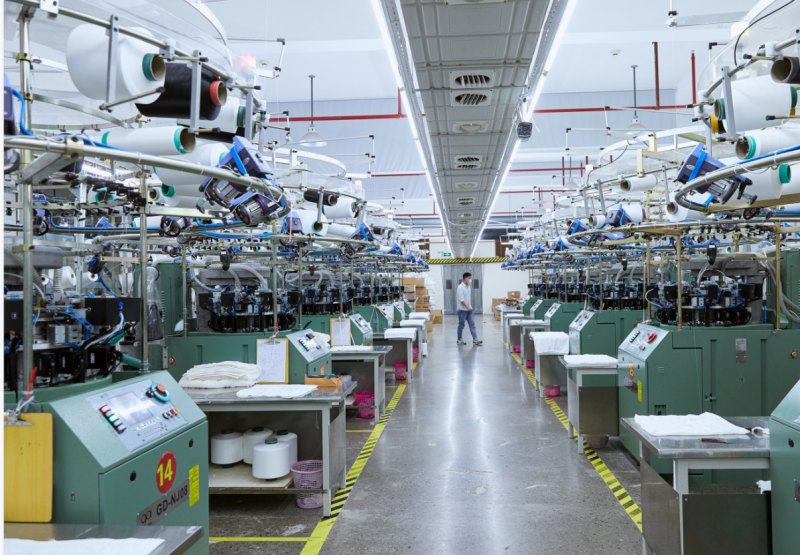
Every year, after the Spring Festival holiday, the period from late February to early March becomes a critical phase when Chinese custom yoga wear factories fully resume operations and gradually restore production capacity. This stage often determines whether brands can:
Launch new products on schedule in the first half of the year
Ensure stable delivery of summer and autumn collections
Have enough time for secondary adjustments or reorder production
For an increasing number of overseas brands, a factory’s post-Spring Festival restart capability has become a key criterion for evaluating professionalism, including whether it has:
The ability to quickly ramp up production
A mature and stable workforce
Clear production schedules and communication mechanisms
These factors are now directly influencing brands’ confidence in year-round collaboration.
III. Consumers Have Changed—Brands Must Adopt a “Long-Term” Mindset
Activewear consumers around 2026 show three clear characteristics.
1. More restrained purchases, but higher expectations
Consumers no longer stockpile products blindly; they now focus on:
Whether fabrics are comfortable and durable
Whether the cut truly suits active movement
Whether a single product can cover multiple lifestyle scenarios
This raises the bar for brands and pressures manufacturers to continuously improve product reliability and consistency.
2. Consumers’ Expectations for “Customization” Are Evolving
Here, “customization” is no longer just about adding a logo or changing colors.
Consumers can clearly perceive whether:
The fit is truly designed for the target audience
The fabric matches the intended usage scenario
The details have been carefully refined through multiple iterations
Behind this lies the essential role of custom yoga wear factories with strong R&D and sample-making capabilities.
3. Consumers’ Assessment of Brand Professionalism Is Becoming More Rational
Brand stories still matter, but they can no longer cover up shortcomings in the product itself.
In the 2026 cycle, brands that truly build repeat purchases are usually those with long-term, stable, and deep manufacturing partnerships.
IV. Product Trends Are Returning to the “Basics,” but the Basics Are Harder Than Ever
Barely-there feel remains important, but it’s no longer the only selling point
Lightweight, soft, and skin-friendly fabrics remain fundamental requirements for activewear, but consumers now also expect:
Reliable support
Clear contours
A sense of safety during movement
This raises the bar for fabric selection, structural design, and process control.
Design is becoming more restrained, emphasizing durability and timeless appeal
Since 2025, the market has clearly been moving away from over-designed products. Instead, it favors:
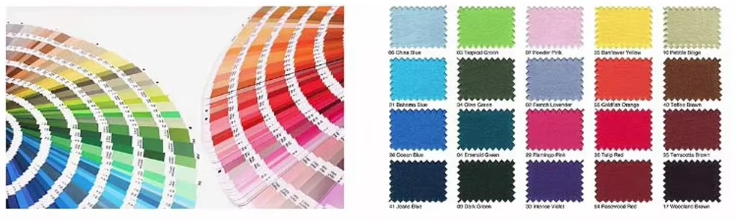
More stable color systems
Cuts suitable for long-term wear
Product logic that emphasizes “value in repeated use”
Such products rely heavily on experienced factory teams to repeatedly sample and optimize designs.
V. Custom Yoga Wear Factories Are Becoming Brands’ “Second Brain”
A clear change in the 2026 cycle is that factories are no longer just executors—they are active participants.
More and more brands are valuing whether a factory can:
Offer suggestions on fabrics and production techniques
Identify potential issues during the sampling stage
Help reduce risks before mass production
Especially for the first batch of orders after the Spring Festival restart, a factory’s professional judgment often determines whether a product can smoothly enter full-scale production.
VI. Why Is “Post-Restart Production Stability” So Crucial?
After resuming operations at the end of February, truly outstanding custom yoga wear factories typically have these characteristics:
Core workers return to their positions steadily
Equipment and processes are pre-checked
Sampling and mass production can proceed simultaneously
Communication and responsiveness are uninterrupted despite the holiday
Such factories can quickly handle:
New product development
Mass production
Multiple rounds of reorders
This capability is key for brands to maintain flexibility throughout 2026.
VII. In 2026, Brands and Factories Will Enter a “Deep Partnership” Phase
The more mature the market, the longer and deeper the collaboration.
The future activewear industry is no longer suited to frequently changing suppliers or constant trial-and-error. Brands that perform steadily often already have a high level of mutual understanding with their manufacturers:
They clearly understand each other’s product logo
They know each other’s rhythms and boundaries
They can face market uncertainties together
The role of custom yoga wear factories is evolving from “manufacturer” to “strategic partner.”
When the Spring Festival holiday ends, factory lights come back on and machines start running, the global activewear market enters a new cycle.
The opportunities in 2026 will not belong to those chasing quick wins, but to brands that:
Plan ahead
Respect manufacturing
Are willing to work long-term with professional factories
At this stage, choosing a truly reliable custom yoga wear factory is often more important than chasing a short-term viral hit.
Because in the end, the market rewards those who get the fundamentals right.

Post time: Jan-21-2026


